
What to do when your opponent leaves the opening line
Use the position, the purpose of your opening moves, and a simple post-game review when an opponent plays outside your prepared line.
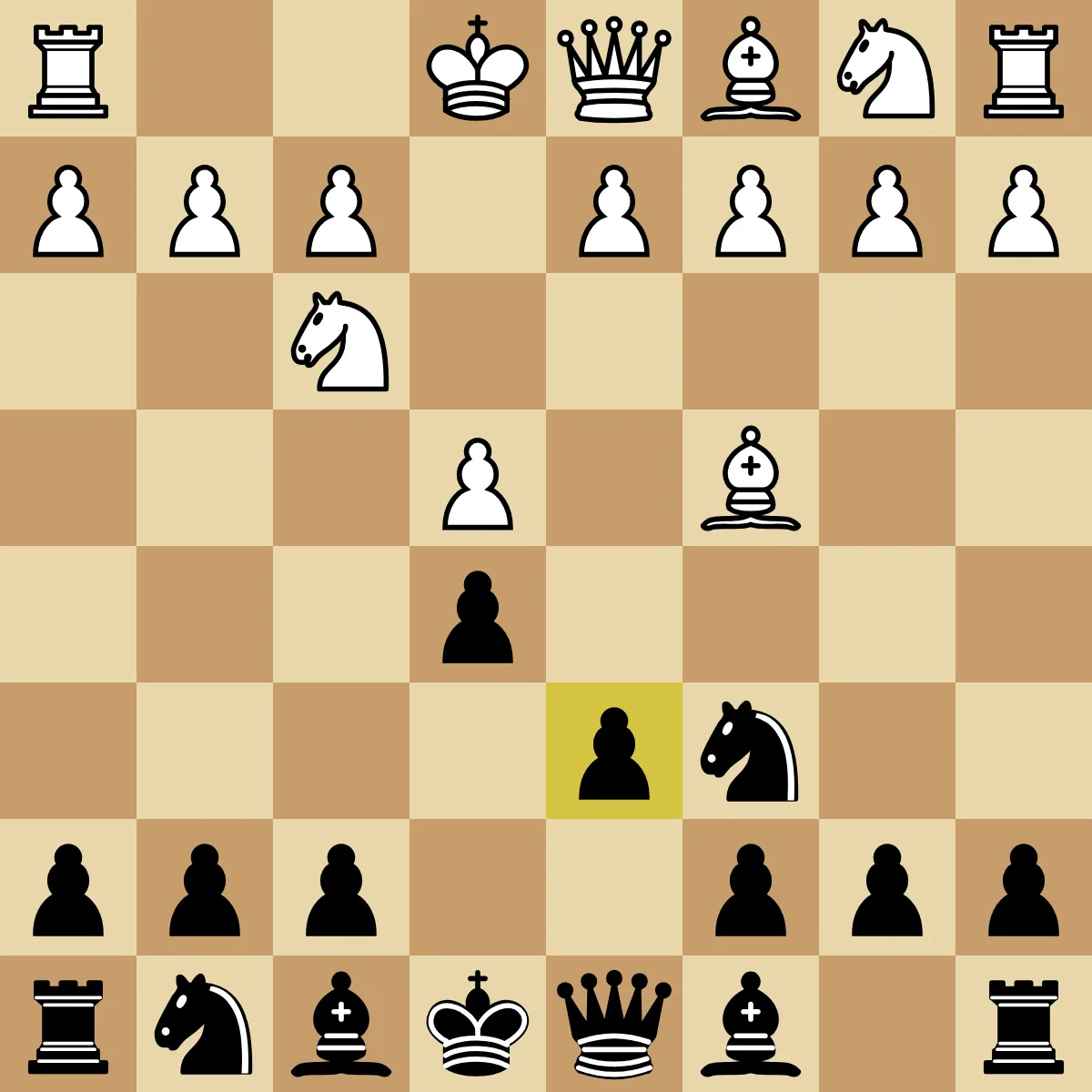
Italian Game position after 1.e4 e5 2.Nf3 Nc6 3.Bc4 d6.
You prepared the Italian Game after 3...Bc5, but your opponent plays 3...d6. The course line has ended, the position still looks familiar, and the clock is running. This is the moment when opening preparation has to hand the game back to your own decision-making.
An unexpected move may create an immediate threat, change the center, transpose into another structure, or spend a tempo on a quiet move. Your response depends on which of those happened.
Do not search your memory for a line you never learned. Read the new position first, then use the purpose of your opening moves to find a sensible continuation. The post-game review can decide whether the deviation belongs in your repertoire.
Treat the move as a new position
The board after the unexpected move is now the only reliable prompt. Compare it with the position you expected and identify what changed.
Start with concrete questions:
- Did the move attack one of your pieces or pawns?
- Did it prepare a central break or prevent yours?
- Did it weaken a square or delay development?
- Did the position transpose into a structure you already know?
Comparing the expected and actual positions keeps you from playing the prepared response automatically. A move that worked after 3...Bc5 may lose its point after 3...d6, even when the two positions share most of their pieces.
Spend more time on the first unfamiliar move than you spent on the known sequence. The opponent has changed the problem, so a quick course response is no longer evidence that the move fits.
Return to the purpose of your moves
Your opening plan remains useful when it is connected to the position rather than a fixed move count. In the Italian Game, White usually wants to develop, castle, and challenge the center under good conditions.
After 1.e4 e5 2.Nf3 Nc6 3.Bc4 d6, Black has supported e5 and kept the light-squared bishop at home. White can compare normal developing choices such as d3, c3, or castling, then ask which one fits the changed center. The point is not to guess a hidden refutation of ...d6.
The Caro-Kann shows how a plan can survive a different move order. If White plays 2.Nf3 instead of the expected 2.d4, Black can still remember that ...c6 prepared a challenge with ...d5. The exact order deserves a fresh check, but the purpose of the first move has not disappeared.
A short reason attached to each prepared move makes this fallback possible. "Prepare d4" is more useful outside the line than remembering only that c3 came fourth.
Do not assume every deviation is bad
Many deviations are playable sidelines or later transpositions. A move may trade one small concession for a position the opponent understands better.
Look for a concrete consequence before trying to punish the move. If it leaves a piece undefended, weakens the king, or gives up the center, calculate how to use that change. If it merely develops to a different square, normal development may still be the best response.
Hunting for a forced win can create a larger error than the unusual move. You may push pawns too early, bring the queen out, or delay castling because the position feels as if it should contain a tactic.
Decide whether the original plan still works
An opponent deviation usually changes your preparation in one of three ways.
- The plan still works, although the exact move order changes.
- The move changes the pawn structure or piece placement, so you need a different plan.
- The move creates a concrete threat that must be answered before the opening plan continues.
When the original plan still works, continue development and verify the move after the game. A structural change may belong to another family or branch. A concrete threat requires calculation now and may deserve a training item later.
Use the smallest response that solves the position. An unfamiliar move does not require rebuilding your entire opening during the game.
Mark the first unfamiliar position
The most useful post-game note is the first position where you no longer knew the plan. Saving only the final blunder can miss the earlier opening decision that created the confusion.
After the game, reopen that position in an explorer or analysis tool. Check whether the move is common, whether it transposes, and which continuations are considered playable. Lichess analysis is a free way to inspect the position; Chessmate itself is not an engine-analysis tool.
Write down one practical answer and its reason. If the opponent's move did not change your plan, that conclusion may be enough. If it created a recurring structure, choose one short line to train from the deviation.
Add a branch only when it earns one
A new branch creates future review work, so the opponent's move should solve a real training problem before it enters your repertoire.
Add the branch when one of these conditions applies:
- the move appears repeatedly in your online games
- it creates a tactical threat that is easy to miss
- it changes the pawn structure or your normal development
- it has caused the same early mistake more than once
A rare quiet move that leaves your normal plan intact may need only a note. You can remember the reason without scheduling a full line for review.
Our guide to practicing chess openings online explains how to keep branch growth tied to actual games. The guide to memorizing chess openings shows how to train the new decision after you choose to keep it.
How Chessmate handles opening branches
Disclosure: Chessmate is our product. No opening trainer can teach a response to every legal move, and Chessmate does not claim to do so.
Chessmate teaches selected theoretical lines inside curated courses. Family pages such as the Italian Game guide explain the broader opening structure, while Course Pages provide one repertoire side and the lines chosen for training.
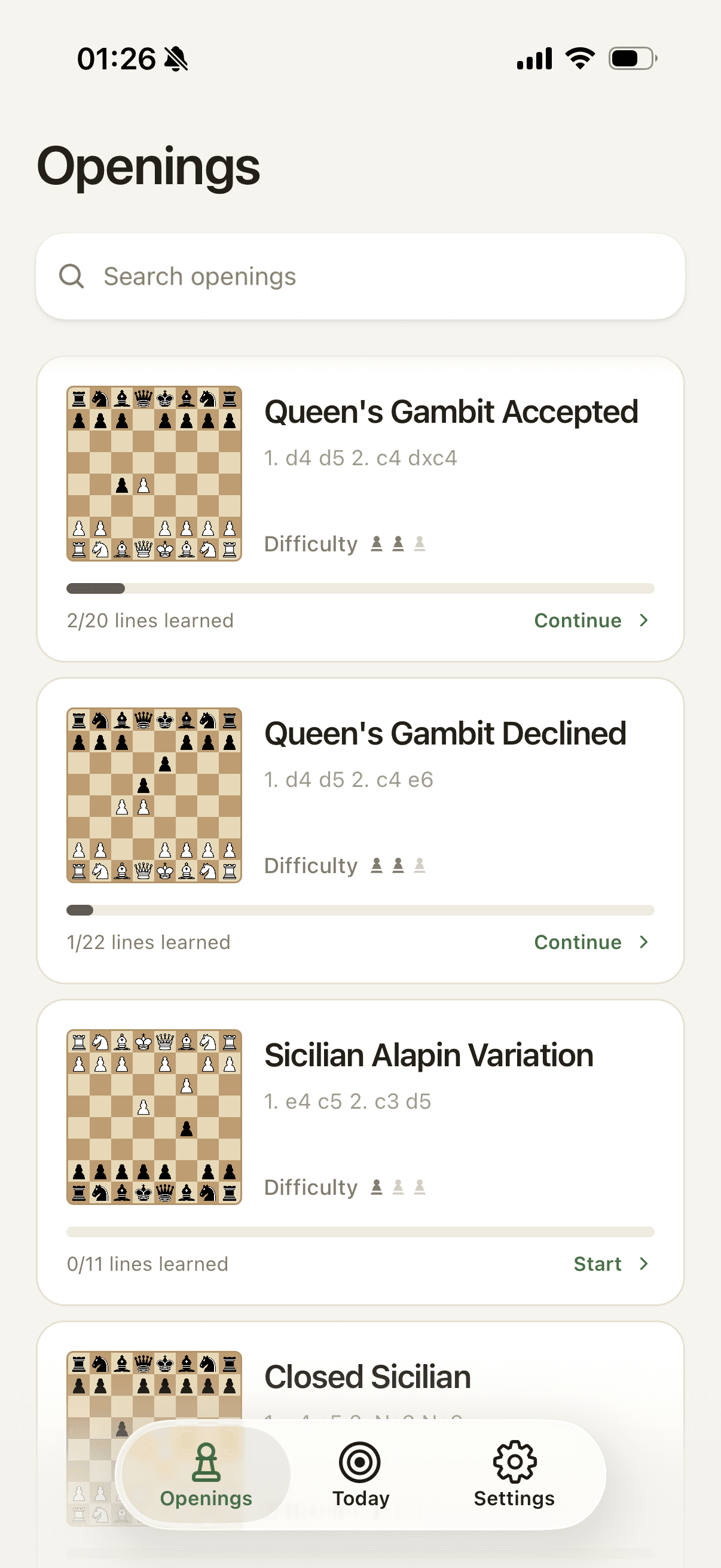
When a deviation proves useful enough to study, connect it to the first unfamiliar board position and a short reason. Review that decision instead of replaying every possible move from the beginning.
When an opponent leaves your line, use what you know about the position instead of treating the preparation as lost. Check the concrete change, recover the plan that still applies, and let the post-game review decide whether the branch deserves a permanent place.
Master openings.
Learn curated lines, recall the move from the board, and keep useful positions fresh with spaced review.


Scan to get the app on your phone