
How to fix chess opening move-order confusion
Stop mixing up similar opening lines by comparing positions, identifying the changed condition, and reviewing branches from the exact split.
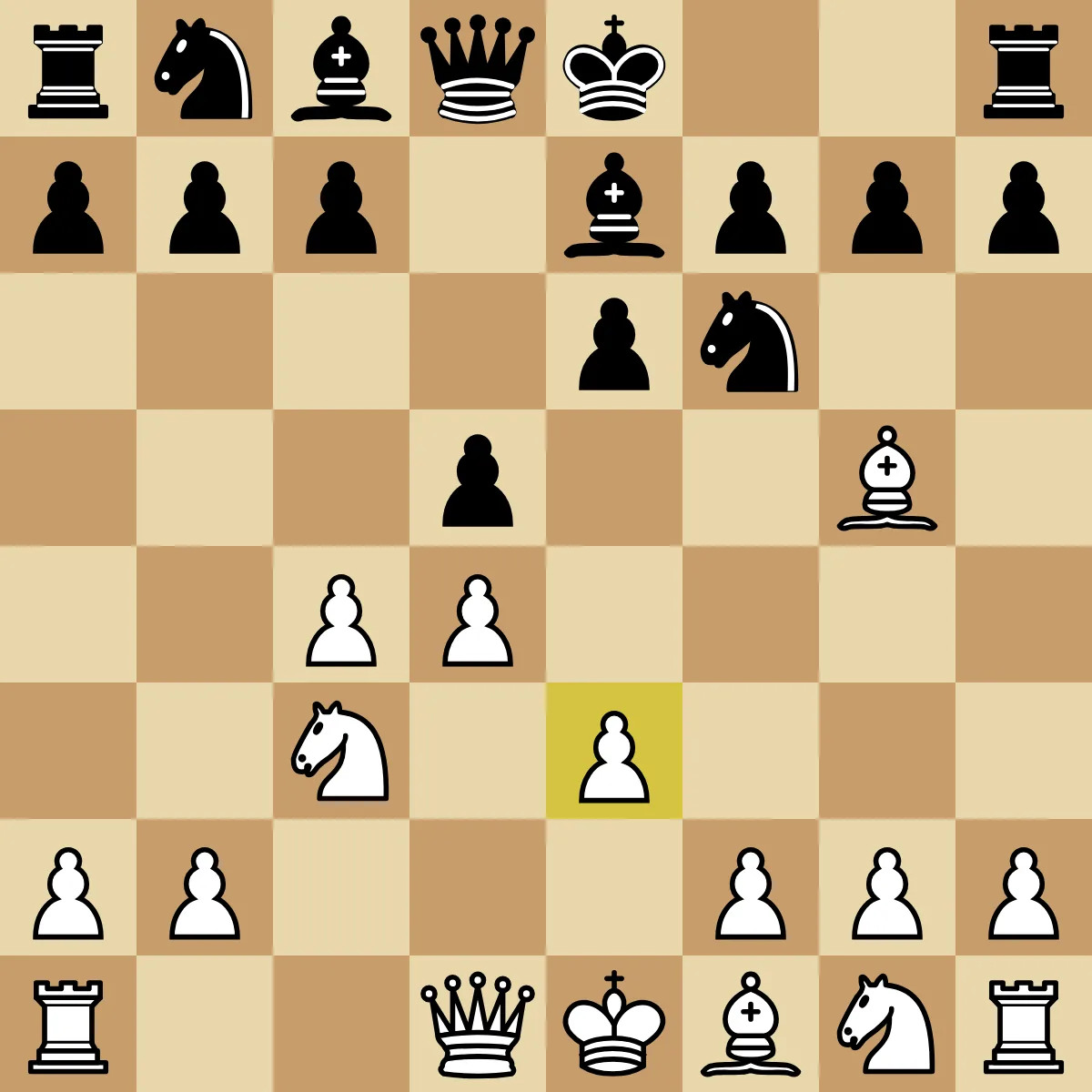
A move order becomes memorable when you know which condition makes the move work.
Move-order confusion rarely means you cannot memorize a sequence. More often, two sequences look similar enough that your memory has no reason to keep them apart.
The fix is not repeating both lines faster. Compare the positions, find the condition that changes the move, and review from the split.
First decide whether the positions are actually different
Two move orders can reach the same board position. That is a transposition. If the same pieces occupy the same squares, the same side is to move, and castling and en passant rights match, you may not need two separate answers.
Other sequences only look similar. One pawn may have moved, one diagonal may be open, or the side to move may differ. Those details can change the correct plan.
Use a board or FEN comparison. Do not rely on opening names; names often overlap or change across databases.
Find the condition behind the move
Take the move you keep mixing up and finish this sentence:
> I play this move now because ______.
Useful conditions include:
- the opponent's center can be challenged before it is supported
- a pin makes a recapture awkward
- the king has castled, so the center can open
- a bishop is outside the pawn chain
- a knight blocks a pawn break
- the opponent's last move created a threat
“Because it is theory” is not a condition. Neither is “because the app says so.”
Mark the exact split point
Suppose two lines share six plies and diverge on the seventh. Start review after ply six, show one opponent reply, and ask for your move. Then reset and show the other reply.
Replaying the common prefix gives you extra context that will not distinguish the answers. The split position carries the cue you need.
For files with many branches, store the opponent's decision as the chapter title: “Black closes with ...e6” is more useful than “Variation B.”
Use contrast review
Review confusing lines as a pair:
- show position A
- name the feature unique to A
- choose the move and reason
- show position B
- name the feature unique to B
- choose the move and reason
- mix the order and repeat later
The goal is not to notice every difference. Find the difference that controls the decision.
For example, a bishop developed outside its pawn chain may make a later ...e6 comfortable. If the bishop is still blocked on c8, the same structure creates a different development problem. That is a meaningful contrast.
Separate legal order from preferred order
Some moves can be played in either order, but one order avoids an opponent option. Record both facts:
- legal: both sequences reach a playable position
- preferred: this order limits a reply or keeps a tactical detail under control
This reduces panic when you play the non-preferred order. You can recognize the inaccuracy without treating the game as lost.
If the order is tactically forced, state the concrete consequence. “Play Nf3 first because ...Qh4 creates X” is easier to retrieve than an unexplained arrow.
Stop memorizing opening names as cues
An opening name is not shown during a game. A course title may group several structures under one family. Review from the board cue: pawn placement, piece activity, threat, and last move.
This is why notation-only study often produces a familiar sequence but a weak response. The study prompt and the game prompt do not match.
The existing guide to memorizing openings shows how to attach a move to a board feature and reason. Move-order work applies that method to two competing branches.
Keep a move-order error log
Use one line per error:
Position: after ...
I played: ...
Prepared move: ...
Changed condition: ...
Why order matters: ...
If you cannot fill in “why order matters,” check a trusted course, annotated game, or analysis source. You may discover that both moves are fine and the memorized distinction was artificial.
That is a useful result. Remove unnecessary branches.
A five-minute repair drill
- Minute 1: compare the two positions
- Minute 2: write the controlling difference
- Minute 3: play each response once with the reason
- Minute 4: alternate the positions without labels
- Minute 5: schedule one later retest
Do not repeat until fluent in one sitting. Later recall reveals whether the cue survived after the answer left working memory. The review guide explains how to retest fragile positions.
Chessmate's board-first Review and Challenge modes can present a trained position without its line title. Disclosure: Chessmate is our product. You can run the same contrast drill in any study tool that lets you start from the branch position.
A move order stops feeling arbitrary when every important “before” has a “because.”
Sources
Master openings.
Learn curated lines, recall the move from the board, and keep useful positions fresh with spaced review.


Scan to get the app on your phone