Common opening mistakes beginners can train away
Spot six opening mistakes using legal move examples, exceptions to beginner rules, and a completed error log you can reuse after your next game.
By Chessmate Team
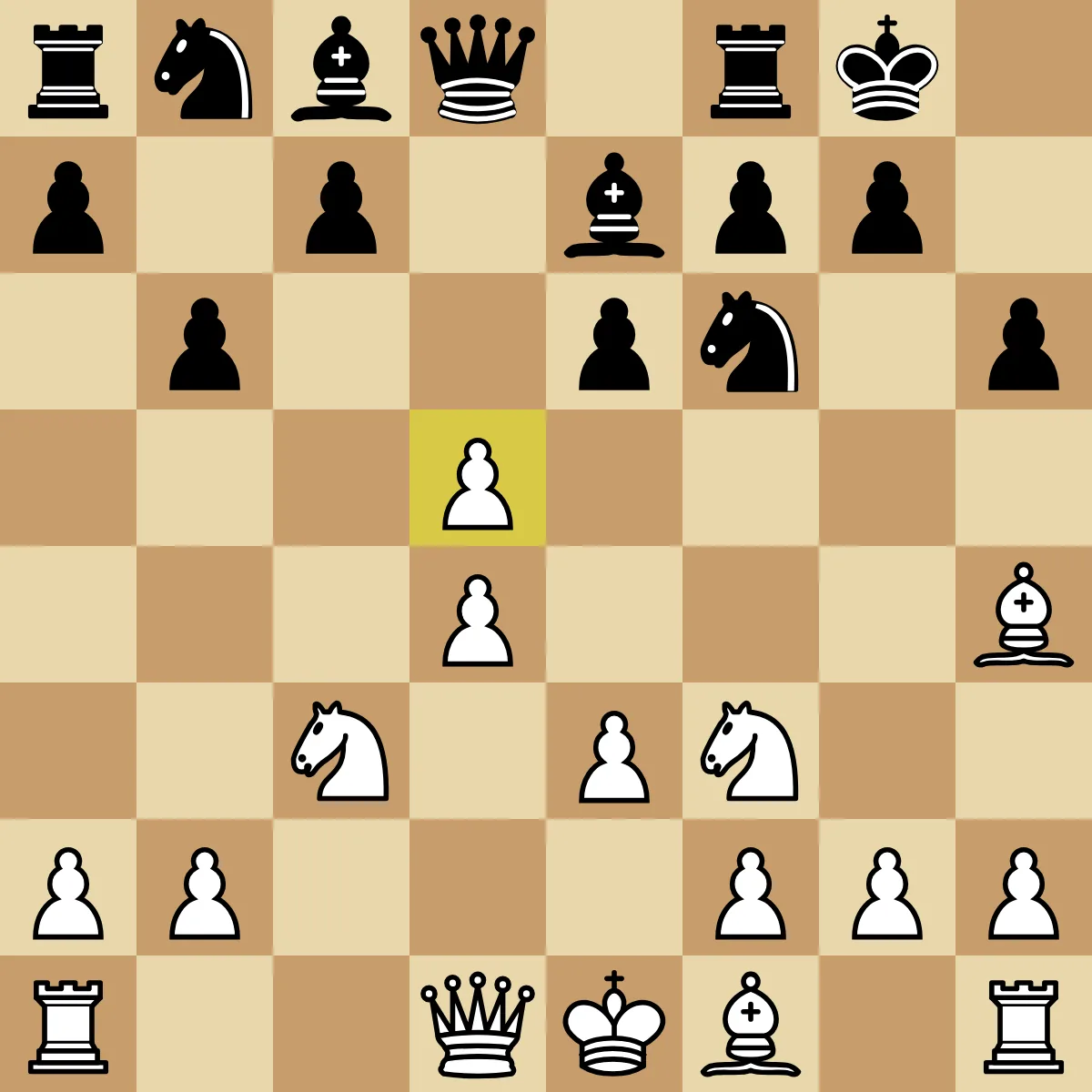
Opening mistakes become trainable when you can identify the position that triggers them.
“Develop pieces, control the center, castle” is useful advice. It is not yet a training method.
An opening mistake becomes trainable when you can save the position before it happened, name the cue you missed, and practice the decision again. The six mistakes below are framed that way.
1. Playing your setup without checking the last move
The mistake: you continue with the planned move even though the opponent created a threat or changed the structure.
The cue: after every opponent move, ask what it attacks, opens, blocks, or prepares.
The drill: take three positions from your games. Hide the continuation and list the opponent's threat before choosing a move. If there is no threat, state that too.
This habit is more valuable than adding another branch. It keeps a sound line from becoming autopilot.
2. Moving the queen early for a vague attack
The mistake: the queen makes several moves chasing a pawn or check while the opponent develops with tempo.
The cue: before an early queen move, count how many useful replies attack it while developing a piece.
The drill: compare your intended queen move with one developing move. State what the queen move wins concretely. If the answer is only “pressure,” it may not justify the time.
Early queen moves are not forbidden. Recaptures and tactical opportunities can make them correct. Train the reason, not a blanket ban.
3. Repeating a piece move without a reason
The mistake: one piece travels several times while the rest of the army stays home.
The cue: ask whether the second move answers a threat, wins something, or reaches a clearly better square.
The drill: in the missed position, mark every undeveloped piece. Find a move that improves one while preserving tactical safety.
The principle is about tempo. A repeated move needs to earn its time.
4. Castling by habit into danger
The mistake: you castle because the opening checklist says so, without examining the destination.
The cue: check open files, missing pawn cover, enemy pieces aimed at the king, and whether the center is about to open.
The drill: pause one move before castling in recent games. Compare castling with one move that addresses the immediate danger. Decide which is safer after the opponent's best reply.
King safety remains a priority. The mistake is treating the same move as safe in every position.
5. Memorizing a move without its condition
The mistake: you play a valid move from another branch because the positions look similar.
The cue: finish “I play this now because…” with a board feature.
The drill: place the two branches side by side. Name the pawn, piece, threat, or move-order detail that changes the answer. Then alternate the positions.
The move-order confusion guide gives the full contrast-review method.
6. Adding theory instead of reviewing the error
The mistake: after every loss, you save more variations but never return to the position that caused the problem.
The cue: ask whether the loss came from missing knowledge, failed recall, a misunderstood plan, or a later tactical mistake.
The drill: save only the first opening decision you want to improve. Attempt it in the next session before studying anything new.
If the opponent played an unfamiliar move, use the out-of-line checklist before adding it to the repertoire.
Find the cue on an actual board
These examples illustrate the six habits; they are not a statistical ranking of beginner errors. Replay them on a board and stop before the decision.
| Habit | Position or record | What to notice and practice |
|---|---|---|
| Autopilot | 1.e4 e5 2.Qh5 Nc6 3.Bc4 | Black must address Qxf7#. 3...g6 blocks the queen's diagonal and attacks it; 3...Nf6 allows mate. |
| Queen trips | Continue 3...g6 4.Qf3 Nf6 | The queen moved again, while Black developed and blocked the f-file threat. Reassess development instead of searching only for another queen attack. |
| Unnecessary repeat | 1.e4 e5 2.Nf3 Nc6 3.Ng1 Nf6 | White used two moves to put the knight back. Compare developing a bishop with retreating when there is no threat requiring the retreat. |
| Automatic castling | 1.e4 e5 2.Nf3 Nc6 3.Bc4 Bc5 4.Nc3 Nf6 5.d3 d6 | 6.O-O is legal here. Check the destination and pawn cover; the point is to verify safety, not to invent a reason to delay sound castling. |
| Wrong condition | Compare 1.e4 d5 2.exd5 Qxd5 with 1.e4 d5 2.exd5 Nf6 | Nc3 attacks the queen only in the first position. In the second it may develop a piece, but “with tempo on the queen” is the wrong explanation. |
| More theory, no review | Three losses; two had the same missed f7 threat, one had a later rook blunder | Retest the f7 position. The rook blunder alone does not justify replacing your opening. |
The exceptions matter. After 1.e4 d5 2.exd5 Qxd5 3.Nc3, Black should move the attacked queen again despite the general advice against repeated moves. Similarly, an early queen recapture can be part of a sound opening. Judge what the move accomplishes in this position.
For the castling example, continue hypothetically 6.O-O Bg4 7.h3 h5 8.hxg4 hxg4. The h-file has now opened toward White's king. The lesson is not that 6.O-O was automatically wrong: White must reassess the later pawn capture and attack. Separate the position before castling from danger created by subsequent choices.
A completed entry, then your own
Example: position after 1.e4 e5 2.Qh5 Nc6 3.Bc4; my move 3...Nf6; consequence 4.Qxf7#; missed cue queen and bishop both attack f7; repair 3...g6, then check the queen's new threat after 4.Qf3; next review the next practice session, with the answer covered. The purpose is to recall a defense and explain the threat, not merely recognize the move string.
Keep each entry short:
Position:
Opponent's last move:
My move:
Better decision:
Cue I missed:
Next review:
The cue is the most important field. “Move 7 was wrong” is hard to use. “I ignored that the e-file opened against my uncastled king” can change a future decision.
Review the habit under a different opening
Once you correct the original position, test the same habit elsewhere.
If the problem was an early queen trip, find another position with a tempting queen move. If the problem was automatic castling, inspect another king position. This checks whether you learned a decision rule or only one answer.
Do not turn the exercise into broad puzzle training. Keep the examples in openings you play or expect to meet.
Know when the opening was fine
Not every early loss is an opening failure. You may reach an equal, understandable position and blunder later. Review the game before changing the repertoire.
Likewise, an opening advantage does not excuse the thought process that produced it. An opponent may fail to punish a risky move.
Measure whether you recognized the position, answered the threat, and reached a plan you understood.
Chessmate provides curated opening lines, board-side explanations, and recall practice. Disclosure: Chessmate is our product. To review mistakes from your own games, any board and notes can support the loop: save the cue, hide the answer, and retest later.
Beginners do not need flawless openings. They need mistakes specific enough to practice.
Sources
Master openings.
Learn curated lines, recall the move from the board, and keep useful positions fresh with spaced review.