How to build a beginner chess opening repertoire
Build a small opening repertoire for White and Black, choose branches by real-game frequency, and know exactly when to add another line.
By Chessmate Team
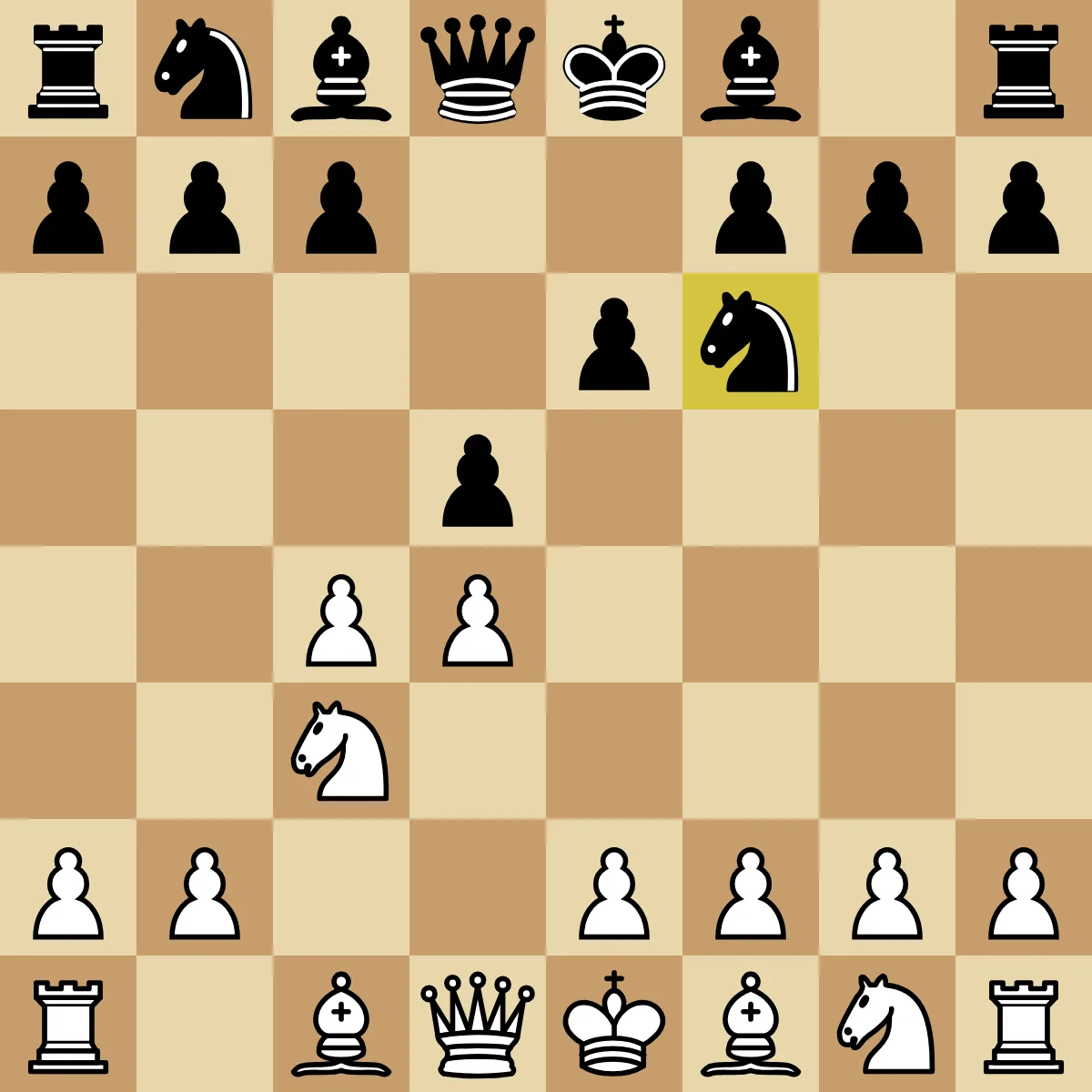
A repertoire is a set of decisions for both sides, not a list of opening names.
A beginner opening repertoire is smaller than most people expect and more complete than a favorite opening name.
It has three starting jobs:
- a plan with White
- a Black response to
1.e4 - a Black response to
1.d4
Those jobs do not require equal amounts of theory. They do require an answer. If your repertoire says “I play the Italian Game and the Caro-Kann,” it still has no plan for Black after 1.d4.
Build the skeleton first. Let actual games add the branches.
Choose positions, not reputations
Opening recommendations often use labels such as aggressive, solid, easy, or theoretical. Those labels are only useful if you can connect them to positions you enjoy playing.
Ask:
- Do I like open files and early piece contact?
- Am I comfortable playing around a fixed pawn center?
- Do I want one recurring structure or several sharper branches?
- How much weekly review can I maintain?
Our guides to White opening choices and Black opening choices compare the practical workload. Make those decisions once, then stop browsing alternatives for a month.
Constantly changing openings prevents the positions from becoming familiar.
Build the White side around Black's replies
White chooses the first move, but Black chooses the branch.
Suppose you begin with 1.e4 and aim for the Italian Game after 1...e5. Your repertoire also needs a modest answer to 1...c5, 1...e6, and 1...c6 as those replies appear. You do not need equal depth against all of them on day one.
Start with:
- your preferred line after the reply you see most
- one safe target position against the next most common reply in your games
- a principle-based fallback for everything else
If you start with 1.d4, the same rule applies. A Queen's Gambit plan after 1...d5 does not automatically answer 1...Nf6. Give each common Black setup a small, explicit place in the map.
Build the Black side as two separate jobs
Black cannot force White to begin with the pawn you prepared for. Treat 1.e4 and 1.d4 as separate repertoire jobs.
Against 1.e4, you might choose the Caro-Kann with 1...c6, the French with 1...e6, or an open game with 1...e5. Against 1.d4, you might start with a direct 1...d5 structure.
The names matter less than the first recurring decision. For the Caro-Kann, that might be recognizing the Advance after 1.e4 c6 2.d4 d5 3.e5. For a Queen's Gambit Declined setup, it might be knowing how ...e6 supports d5 while temporarily restricting the c8 bishop.
One clear response to each first move is more useful than three half-learned defenses to 1.e4 and nothing against 1.d4.
Define a target position for every branch
A line should end somewhere useful. Choose a target position where:
- the opening's central structure is visible
- your pieces have natural development squares
- the immediate tactical danger has passed
- you can name the next plan without more notation
This prevents a repertoire from becoming a collection of arbitrary move counts. Some branches need six moves. A sharp sideline may need ten. Stop when the position becomes playable and understandable, not when a chapter number says so.
The opening catalog is organized by families and courses so you can move from a broad map to one trainable line. An explorer is also useful for checking which replies occur. It is not a reason to import the whole tree.
Add a branch only when it earns review time
Every added branch creates future maintenance. Use a simple admission rule. Add a line when at least one condition is true:
- the move appeared in two recent games
- the move changes the pawn structure or creates a concrete threat
- you have already made the same mistake in that position
- the move is a main response missing from your current skeleton
Otherwise, leave a note and keep playing.
This policy is deliberately conservative. A small repertoire that you can recall is stronger in practice than a large tree you recognize only while looking at it.
Keep a one-page repertoire map
Your map can be plain text:
WHITE: 1.e4
- 1...e5: Italian Game, reach a calm c3/d3 setup
- 1...c5: one anti-Sicilian line
- 1...c6: meet the Caro-Kann center

BLACK VS 1.e4
- 1...c6: Caro-Kann

BLACK VS 1.d4
- 1...d5: Queen's Gambit Declined setup
Under each branch, store one target position, one sentence about the plan, and the next review date. That is enough to expose gaps without turning the map into a book.
Review from the opponent's decision point
Do not always replay from move one. If two branches split after the opponent's third move, begin there and ask for your answer. The board in a game is the cue, not the chapter title.
This is also where similar branches interfere. If you confuse two lines, place the positions side by side and ask what changed: pawn structure, open diagonal, tactical threat, or development order. The move-order confusion guide gives a method for separating them.
Know when the repertoire is complete enough
Your first repertoire is ready for regular play when:
- you have a named job for White and both Black first-move problems
- the most common reply in each job reaches a target position
- you can attempt your next move from the board
- a forgotten line does not stop you from applying opening principles
- you know where to record a new recurring problem
It will never be complete in the database sense. It can be complete enough for your current games.
Chessmate provides curated family and course choices, explanations beside the board, and Study, Review, and Challenge modes. Disclosure: Chessmate is our product. Whatever tools you use, keep the same architecture: three jobs, a few target positions, and branches that enter only after they prove useful.
Sources
Master openings.
Learn curated lines, recall the move from the board, and keep useful positions fresh with spaced review.