
Best chess openings for White: beginner-friendly choices
Compare practical chess openings for White by position, workload, and the Black replies each choice must cover in a beginner-friendly repertoire.
By Chessmate Team · Updated October 9, 2026
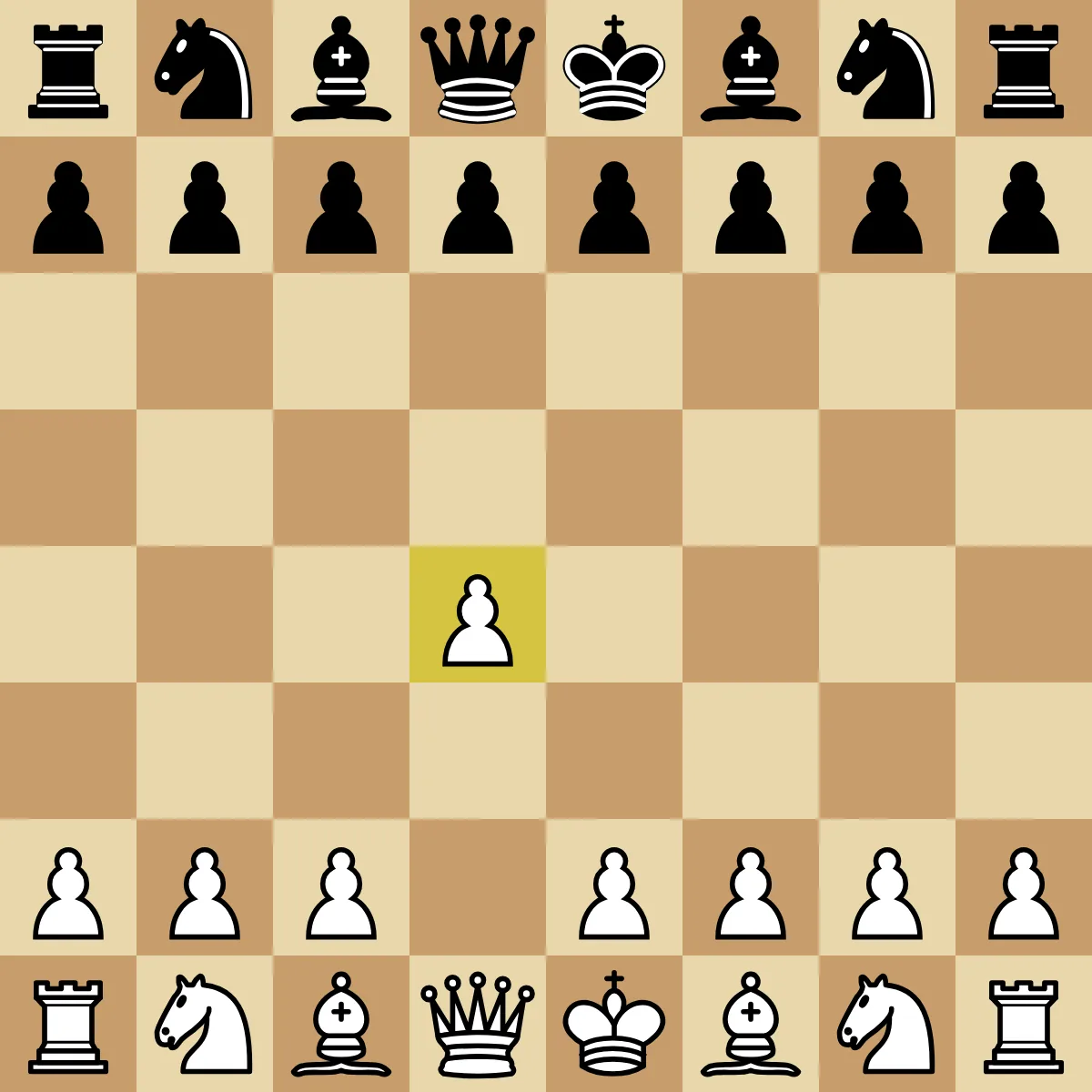
Position after 1.d4, one practical starting point for a White repertoire.
The best chess openings for White lead to positions you want to reach again. For a beginner-to-intermediate player, a useful choice also leaves enough practice time for Black's replies, because no named opening appears by force after White's first move.
The Italian Game and Queen's Gambit make practical starting points for different reasons. The Italian gives 1.e4 players active development after 1...e5. The Queen's Gambit gives 1.d4 players a recurring fight over the center after 1...d5. The Scotch and Vienna offer other ways to handle 1...e5, while the Closed Sicilian provides a smaller project when Black answers 1.e4 with 1...c5.
Choose the position before you choose the name. The sections below compare what each opening asks you to recognize, what Black must play for it to appear, and how much material belongs in the first training set. If you would rather start from your rating and playing style, the opening quiz suggests a White opening and Black replies to try first.
Compare chess openings for White by the center they create
Your first move influences the positions you are likely to study, though it does not lock the game into one style. After 1.e4, open files and direct piece contact can appear early. After 1.d4, the central pawns often remain in place longer and make pawn structure a larger part of the plan.
The distinction matters because practice should resemble the decisions you enjoy making. A player who likes quick development may lose patience in a slow Queen's Gambit Declined. A player who enjoys structural pressure may find a forcing Two Knights line more work than fun.
Use this short comparison as a starting point:
| Opening | Appears after | First position to recognize | Initial workload |
|---|---|---|---|
| Italian Game | 1.e4 e5 2.Nf3 Nc6 3.Bc4 | Black chooses ...Bc5 or ...Nf6 | Small if you begin with one branch |
| Queen's Gambit | 1.d4 d5 2.c4 | Black accepts on c4 or defends d5 | Two main structures |
| Scotch Game | 1.e4 e5 2.Nf3 Nc6 3.d4 | The center opens after ...exd4 | Concrete but direct |
| Vienna Game | 1.e4 e5 2.Nc3 | White chooses quiet development or f4 | Depends on the gambit choice |
| Closed Sicilian | 1.e4 c5 2.Nc3 | White builds behind a closed center | A separate answer to 1...c5 |
The workload column describes a sensible first project, not the full theory of each opening. Every family can grow much larger later.
Italian Game: the clearest 1.e4 e5 starting point
The Italian Game begins with 1.e4 e5 2.Nf3 Nc6 3.Bc4. White develops two pieces, prepares castling, and points the bishop toward f7. Those jobs remain visible even when the exact continuation is new.
Black's third move creates the first useful split. After 3...Bc5, White can prepare the center with c3 and d4 or build more slowly with d3. After 3...Nf6, Black attacks e4 and enters the Two Knights Defense, where White may need a more concrete response.
The Italian is the easiest recommendation here when a beginner wants active pieces and a Core White course that matches the opening. Start with the Italian Game course, then use the Italian beginner guide to decide when the ...Nf6 branch deserves its own training time. The ...Nf6 branch also contains the Fried Liver Attack: after 4.Ng5 d5 5.exd5 Nxd5, White can sacrifice a knight on f7. Practice it with other chess traps for White as an extra, not as your main plan.
Queen's Gambit: a first repertoire built around structure
The Queen's Gambit begins with 1.d4 d5 2.c4. White challenges Black's d5 pawn and asks Black to release the center, defend it, or support it in another way.
Black's answer gives White two recurring jobs. After 2...dxc4, White uses the center and development to recover the c-pawn under good conditions. After 2...e6, White develops pressure against d5 while Black works to free the light-squared bishop.
The Queen's Gambit suits a beginner who wants plans that survive beyond a single move order. It requires two starting branches, so choose the Accepted course or the Declined course first rather than learning both in the same week. The Queen's Gambit beginner guide shows how Black's second move separates those plans.
Scotch Game: open the center immediately
The Scotch Game starts after 1.e4 e5 2.Nf3 Nc6 3.d4. White challenges e5 at once, and Black usually responds with 3...exd4.
The Scotch gives White a direct plan: open the center while development is still incomplete, then use active pieces. That directness is attractive, but open positions punish slow development and careless recaptures. The first line should explain what White does after Black exchanges on d4 rather than collect every Scotch Gambit tactic.
Chessmate's current Scotch course is for Black. The family guide is still useful for understanding the position, but do not mistake a Black course for a White repertoire. A White Scotch course would need to be trained elsewhere until the catalog adds that side.
Vienna Game: keep the f-pawn available
The Vienna Game begins with 1.e4 e5 2.Nc3. White develops the queen's knight first, keeps the f-pawn free, and can choose between ordinary development and the Vienna Gambit.
The quiet setups may resemble the Italian, but the knight on c3 blocks the c-pawn. White cannot assume that the usual c3 and d4 plan is available. The gambit with f4 creates a different commitment: White gains attacking chances while accepting more concrete defensive questions.
Choose the Vienna when that flexibility appeals to you, then commit to either a quiet setup or a gambit line for the first practice cycle. Chessmate currently trains the Vienna from Black's side, so its course does not supply a White repertoire.
Closed Sicilian: give 1...c5 its own answer
A 1.e4 repertoire needs a response when Black plays the Sicilian Defense. The Italian, Scotch, and Vienna cannot appear because Black has not played ...e5.
The Closed Sicilian course begins after 1.e4 c5 2.Nc3 and keeps the center closed for longer than the Open Sicilian. White often develops with g3, Bg2, and d3, then chooses when to expand on the kingside.
The setup reduces the amount of immediate Open Sicilian theory, but it still responds to Black's position. Black's central and queenside play determines whether a routine kingside attack is ready. Learn one line against Black's common setup and add another only when it appears in your games.
Build the smallest complete White repertoire
A first White repertoire must cover the Black replies that prevent your main opening from appearing. Pick one first move, then prepare those replies without collecting unrelated opening names.
For 1.e4, a small plan could contain:
- one Italian line against
1...e5 - one Closed Sicilian line against
1...c5 - one short response to the French or Caro-Kann when it begins appearing regularly
For 1.d4, start with one Queen's Gambit branch against 1...d5. Record the first unfamiliar position against ...Nf6, then choose a response after you know which Indian setup you are meeting.
This approach keeps the opening repertoire tied to real decisions. It also prevents a common planning error: calling the Italian your White repertoire while having no plan after Black's first move changes.
Train the first branch from the board
The first training session should stop after one meaningful branch. Replay the moves until Black's reply, hide the continuation, and produce your response from the board. Attach a short reason to that move so it can be reconstructed when the notation is gone.
Our guide to practicing chess openings online covers the full loop of choosing a line, recalling moves, reviewing later, and adding branches from games. Use that loop on one White decision before expanding the repertoire.
Disclosure: Chessmate is our product. Its current White Core starting points include the Italian Game and Closed Sicilian, while the Queen's Gambit courses provide separate Accepted and Declined paths. The catalog also contains families whose current courses train Black, so always check the course side before starting.
The right opening for White gives you a position worth repeating and enough time to prepare Black's replies. Choose the Italian for active 1.e4 e5 development, the Queen's Gambit for a structural 1.d4 d5 fight, or another family because its first decisions suit you. Then prepare the Black reply that stops your favorite opening from appearing.
Master openings.
Learn curated lines, recall the move from the board, and keep useful positions fresh with spaced review.


Scan to get the app on your phone