
Italian Game for beginners: what to learn first
Learn the first Italian Game positions to recognize, how 3...Bc5 differs from 3...Nf6, and which branch a beginner should train first.
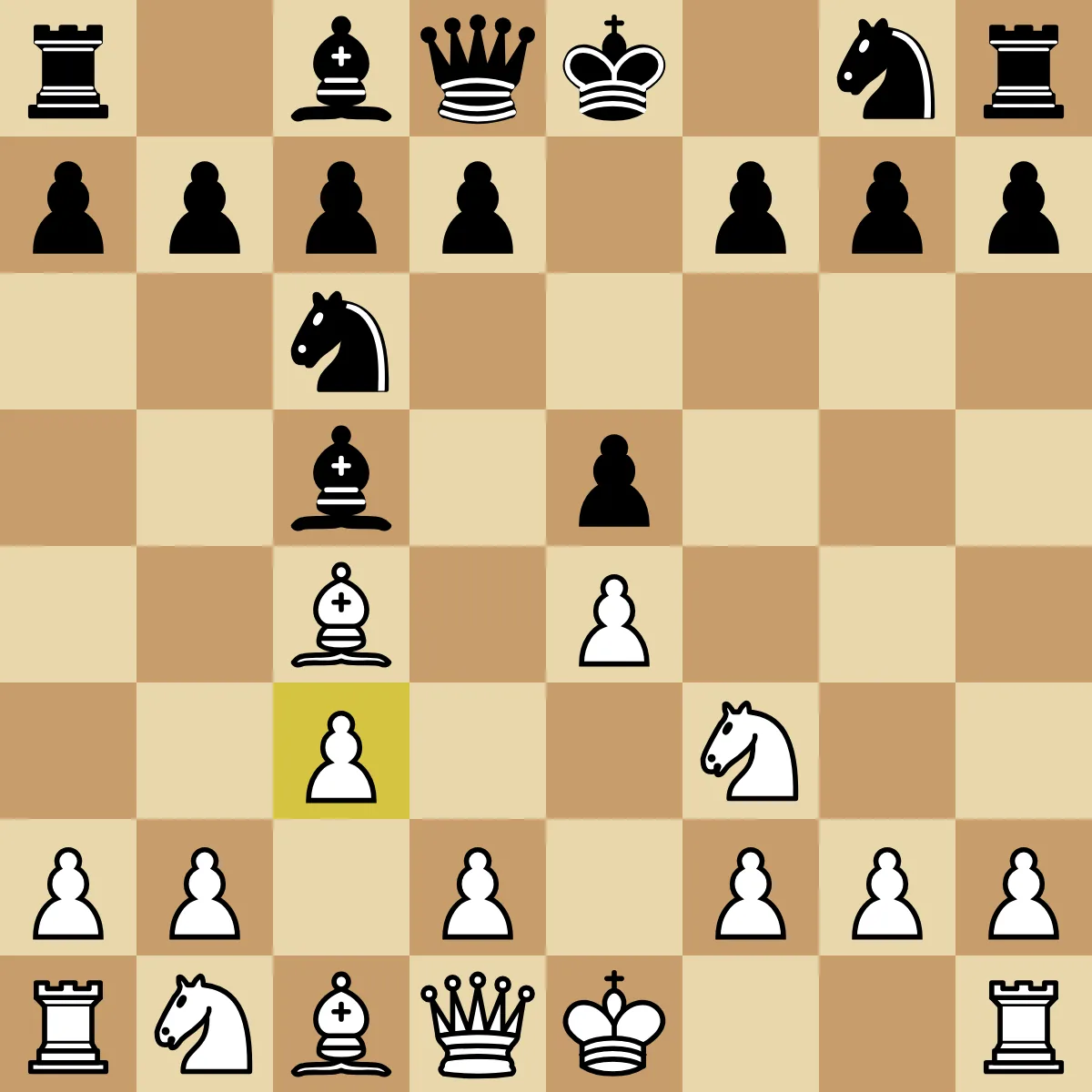
Italian Game after 1.e4 e5 2.Nf3 Nc6 3.Bc4 Bc5 4.c3.
The Italian Game begins with 1.e4 e5 2.Nf3 Nc6 3.Bc4. White develops toward the center, prepares to castle, and points the bishop at f7. The first three moves are easy to understand; the next Black move decides what you should learn first.
Black usually changes the character of the position with 3...Bc5 or 3...Nf6. The bishop move gives White time to build with c3 and d4 or choose a slower d3 setup. The knight move attacks e4 and enters the Two Knights Defense, where concrete tactics can arrive quickly.
A beginner can start with one of those branches. Choose the reply you face most often, learn the position it creates, and add the other branch when your games make it relevant.
What the Italian position asks from White
White's bishop on c4 creates pressure on f7 while clearing the way for kingside castling. The pressure gives White a useful target while the rest of the pieces develop, though it does not produce an automatic attack.
The center determines whether the bishop remains active. White often prepares d4 with c3, supports a quieter center with d3, or reacts to Black's immediate attack on e4. These choices make more sense when you see them as responses to Black's setup rather than as a fixed sequence.
Your first Italian line should therefore reach one recognizable center. Learn where the king belongs, how White prepares the pawn break, and when the bishop may need to retreat. The detailed Italian Game family guide covers the broader branch map; this article focuses on the first training decision.
First branch: Black plays 3...Bc5
After 3...Bc5, both sides have developed active bishops and can castle quickly. White now chooses between opening the center with c3 and d4 or keeping it closed for longer with d3.
The c3 plan gives each move a visible job. White prepares d4, challenges Black's e5 pawn, and may gain time against the bishop after the center opens. The exact move order changes across lines, but the relationship between c3 and d4 stays useful.
The quieter d3 setup lets White finish development before opening the center. White still needs to watch Black's central breaks, decide where the queenside knight belongs, and choose when d4 is ready.
Beginners can start with the 3...Bc5 family because the plans remain visible even when the opponent changes the move order slightly. The Italian Game course is a White Core course built for this starting scope.
Second branch: Black plays 3...Nf6
After 3...Nf6, Black develops with an attack on e4 and enters the Two Knights Defense. White must decide whether to protect the center quietly or create immediate pressure on f7 with 4.Ng5.
A quiet d3 setup keeps the position closer to normal Italian development. White protects e4, prepares to castle, and delays the forcing lines. This is a reasonable first response for a player who wants to understand the position before studying a tactical branch.
The move 4.Ng5 asks much more concrete questions. After 4...d5 5.exd5, Black needs an accurate defense and White needs to know whether an apparent attack is sound. The Fried Liver, Lolli, and related lines belong to this part of the tree.
Train the Two Knights Defense for White course when you play White and meet ...Nf6 often. The separate Two Knights Defense for Black course teaches Black's side; the two courses should not be mixed into one repertoire.
Learn the center before the traps
Italian traps are easier to understand after you know which center produced them. An attack on f7 may work when Black has delayed development, yet fail when Black can answer in the center.
Start by recognizing three features of the position:
- whether Black developed the bishop to c5 or the knight to f6
- whether White has prepared
d4withc3 - whether either king is still in the center when the files begin to open
The center, king positions, and Black's third move explain why the same attacking idea can work in one Italian line and fail in another. A list of trap names cannot replace that position check.
The Italian Game family page introduces the Evans Gambit, Two Knights tactics, and other branches. Use those sections as a map, then train only the variation that belongs to your current White or Black course.
A practical training order
A small Italian repertoire can grow in four stages.
- Learn the starting position after
3.Bc4and the jobs of the three White moves. - Train one
3...Bc5line until thec3andd4plan feels connected. - Add a quiet response to
3...Nf6or train the Two Knights as its own branch. - Add a gambit or trap only after it appears in your games or repeatedly causes a problem.
This training order keeps the broad family separate from the line you need to recall. It also prevents a common mistake: learning several sharp names while remaining unsure about the ordinary 3...Bc5 position.
The Italian Four Knights is another possible path after both knights develop. Its Chessmate course is White and Advanced, so it makes more sense after the Core Italian line than as a replacement for learning the first position.
Review from Black's last move
Each review should begin after the move that created your decision. Show 3...Bc5 and recall the setup you trained. Show 3...Nf6 and recall whether your repertoire uses d3, Ng5, or another course move.
Starting every review from 1.e4 can hide branch confusion because the shared moves are easy. A prompt at the split tells you whether the opponent's move cues the correct response.
Our guide to memorizing chess openings explains how to connect a board cue, a move, and a short reason. Keep that method local to the Italian branch you are learning.
How Chessmate organizes the Italian Game
Disclosure: Chessmate is our product. The training order above can also be used with another board-based trainer or a carefully organized study.
Chessmate separates the Italian family into courses by side and scope. The Core Italian Game course is a White starting point. Italian Four Knights and both Two Knights courses are Advanced, with separate White and Black repertoires.
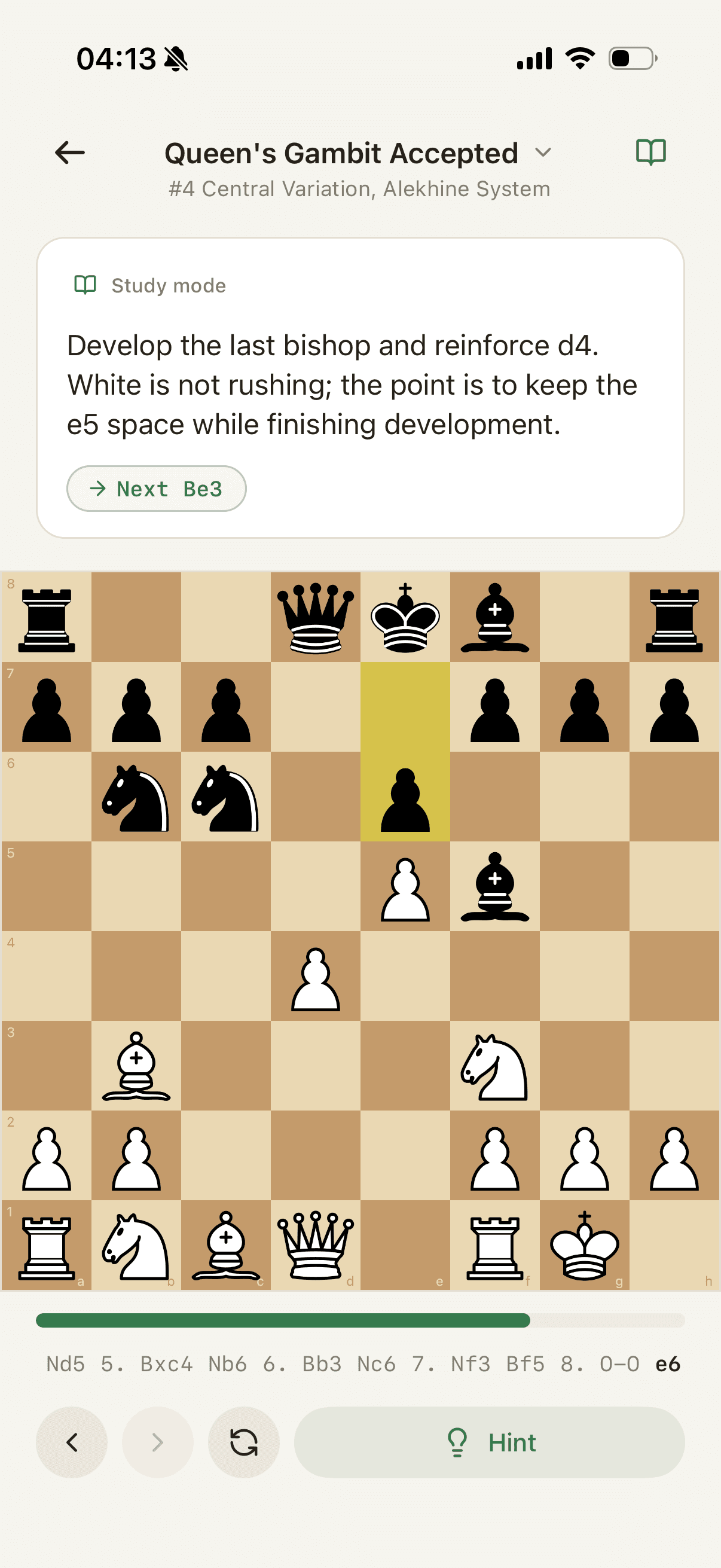
The Italian becomes manageable when you treat ...Bc5 and ...Nf6 as separate decisions. Learn the quieter main structure first, then add the sharper branch that appears on your board. The family can stay broad while your first course remains small.
Master openings.
Learn curated lines, recall the move from the board, and keep useful positions fresh with spaced review.


Scan to get the app on your phone