Opening prep for blitz and rapid: what to study from your games
Turn recent online games into one opening priority. Use a worked game-review table, choose how deep to prepare, and build a 30-minute weekly session.
By Chessmate Team
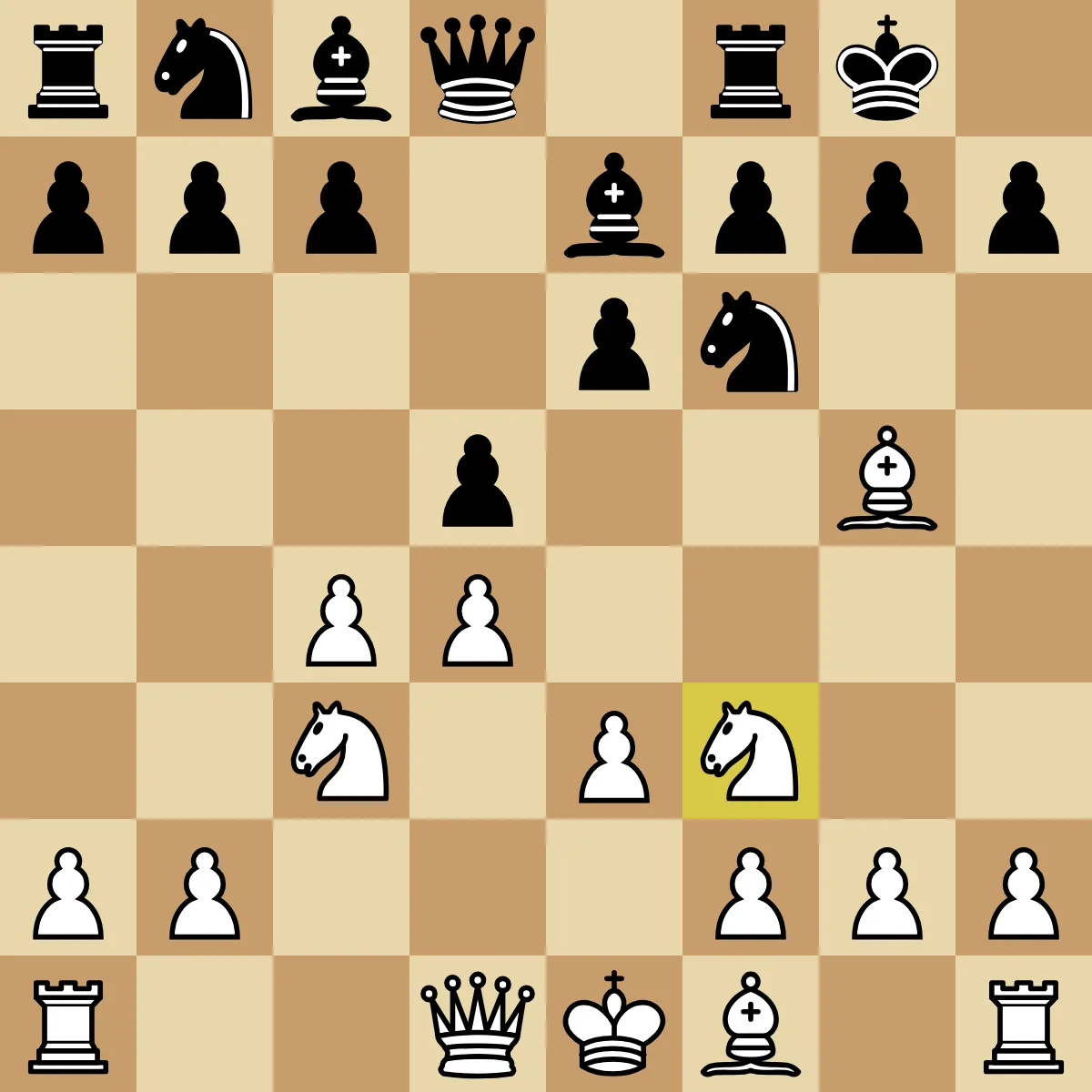
Online preparation should target positions that actually recur in your games.
Online opening preparation is not miniature grandmaster preparation. You usually do not know your next opponent, the game may last five minutes, and the same practical positions appear more often than the rare critical lines that attract analysis videos.
Prepare for your pool of games, not an imaginary tournament.
Start with your own opening history
Start with a manageable batch, such as your last 20 games at one time control. This is a practical starting size, not a research-backed optimum. Expand the sample if your opening rarely appears. Tag three moments:
- the first position where you forgot your intended move
- the first common reply missing from your repertoire
- the first position where you knew the move but not the plan
Count recurrence. A position that caused trouble three times belongs ahead of a fascinating sideline you have never faced.
Do not use win rate alone. You can lose after a good opening and win after a bad one. Inspect the decision and the resulting position.
A completed priority table from an example game batch
The following is a fictional 20-game teaching example, not Chessmate user data or an opening-frequency claim. It shows how a decision can outrank a larger pile of theory. Each game contributes at most one first opening issue.
| First opening issue | Games | What the notes show | This week's decision |
|---|---|---|---|
Missed defense after an early Qh5 and Bc4 | 3 | Twice missed the threat on f7; once spent too long finding a reply | Practice first: recurring and concrete |
| Forgot a quiet Queen's Gambit move | 4 | Found a playable developing move each time; no opening damage identified | Save a plan note; no new branch yet |
| Unfamiliar gambit | 1 | Could not explain the resulting position | Inspect next; escalate if the threat or recurrence warrants it |
| No opening issue selected | 12 | Later mistakes or a comfortable opening | Keep out of this opening queue |
The most frequent hesitation is not automatically the most urgent repair. Here the f7 problem comes first because it combined recurrence with a missed threat. In another batch, a single serious forcing line may deserve immediate attention. Do not turn the table into a rigid numerical score.
Copy these fields into your own notes: game link; color; time control; position before the error; opponent's last move; my candidates; concrete consequence; repair; next review. For this example the repair is “recognize queen plus bishop pressure on f7, defend it, then check the next queen move.” The next review starts with that board and the answer hidden.
For blitz, rehearse recognizing the cue promptly without racing through unexamined threats. For rapid, also write the strongest reply you considered. Keep the two time controls separate when comparing your later games. A larger rapid clock and a different opponent pool can change the result without any change in preparation.
How many moves should you prepare for blitz or rapid?
Move count is a poor measure of preparation.
Prepare deeper when:
- the moves are forcing
- one natural response loses material
- a move-order detail changes the position sharply
- the same branch appears often
Stop earlier when:
- several healthy moves are available
- the target structure and plans are clear
- later play depends more on calculation than recall
A quiet Queen's Gambit structure may need a handful of decisions and a clear pawn-break plan. A tactical gambit may require a longer concrete answer. “Ten moves in every line” fits neither.
Build for recognition under your time control
In blitz, the value of preparation is often fast recognition. You want the opponent's move to trigger a familiar response and reason without a long memory search.
In rapid, you have more time to compare candidates, but early hesitation still consumes clock and attention. Use the extra time to verify tactics, not to reconstruct an opening chapter from scratch.
For both formats, practice from the board. Notation lists and videos can explain a line, but the game presents pieces and a clock.
Prepare one target position, not only a sequence
For each main branch, save a position where the opening has done its job. Note:
- whose king is safe
- which central break matters
- your least active piece
- the opponent's main counterplay
- one trade you welcome or avoid
If you can reach the position but cannot answer those questions, the line is not yet practical preparation.
The opening catalog can help you locate a family and course. The goal is not to exhaust the family; it is to reach a position you can play.
Prepare for common deviations without chasing every move
Online opponents will leave theory early. Keep a small “deviation file” for replies that recur or create a real threat.
When a new move appears:
- check whether it is tactically sound
- identify what changed in the structure
- compare it with your prepared branch
- add it only if it deserves future review
The full opponent-deviation guide turns this into an in-game checklist.
Use explorers for frequency, trainers for recall
An opening explorer can show which moves appear in a database. Lichess currently provides a global and personal opening explorer among its features. Its official feature page describes both. Frequency is useful for deciding what to inspect.
It does not tell you whether you can find the move yourself. Once you select a branch, close the statistics and attempt the response from the board. The opening trainer versus explorer comparison separates those workflows.
A 30-minute weekly prep session
- 10 minutes: review recent games and select one recurring problem
- 8 minutes: inspect the branch and write the plan
- 8 minutes: recall the position and one nearby alternative
- 4 minutes: update your repertoire map and next review
Between weekly sessions, use short reviews. A concrete 15-minute routine is enough to keep fragile positions active.
Avoid the online-prep traps
Three habits waste preparation time:
Changing openings after every loss. The loss may have happened later, and changing prevents familiarity.
Studying traps as the whole repertoire. A trap depends on cooperation. Prepare the sound position after the opponent avoids it.
Copying elite depth without elite context. A line can be theoretically important and practically rare in your games. Learn enough to understand why it matters before allocating repeated review.
Measure whether prep worked
After a week, ask:
- Did the target position appear?
- Did I recognize the branch faster?
- Could I explain my next plan?
- Did the same early error repeat?
- What new reply earned a place in the queue?
That feedback is more useful than the number of lines completed.
Chessmate offers curated lines, board-side explanations, and Study, Review, and Challenge modes. Disclosure: Chessmate is our product. You can build the same online-prep loop with any explorer, board, notes, and recall tool.
Online preparation works when it shortens the distance between a position you often see and a decision you can actually make.
Sources
Master openings.
Learn curated lines, recall the move from the board, and keep useful positions fresh with spaced review.