A 15-minute daily chess opening training routine
Use 15 focused minutes to review weak positions, learn one decision, test recall, and capture one useful lesson from your games.
By Chessmate Team
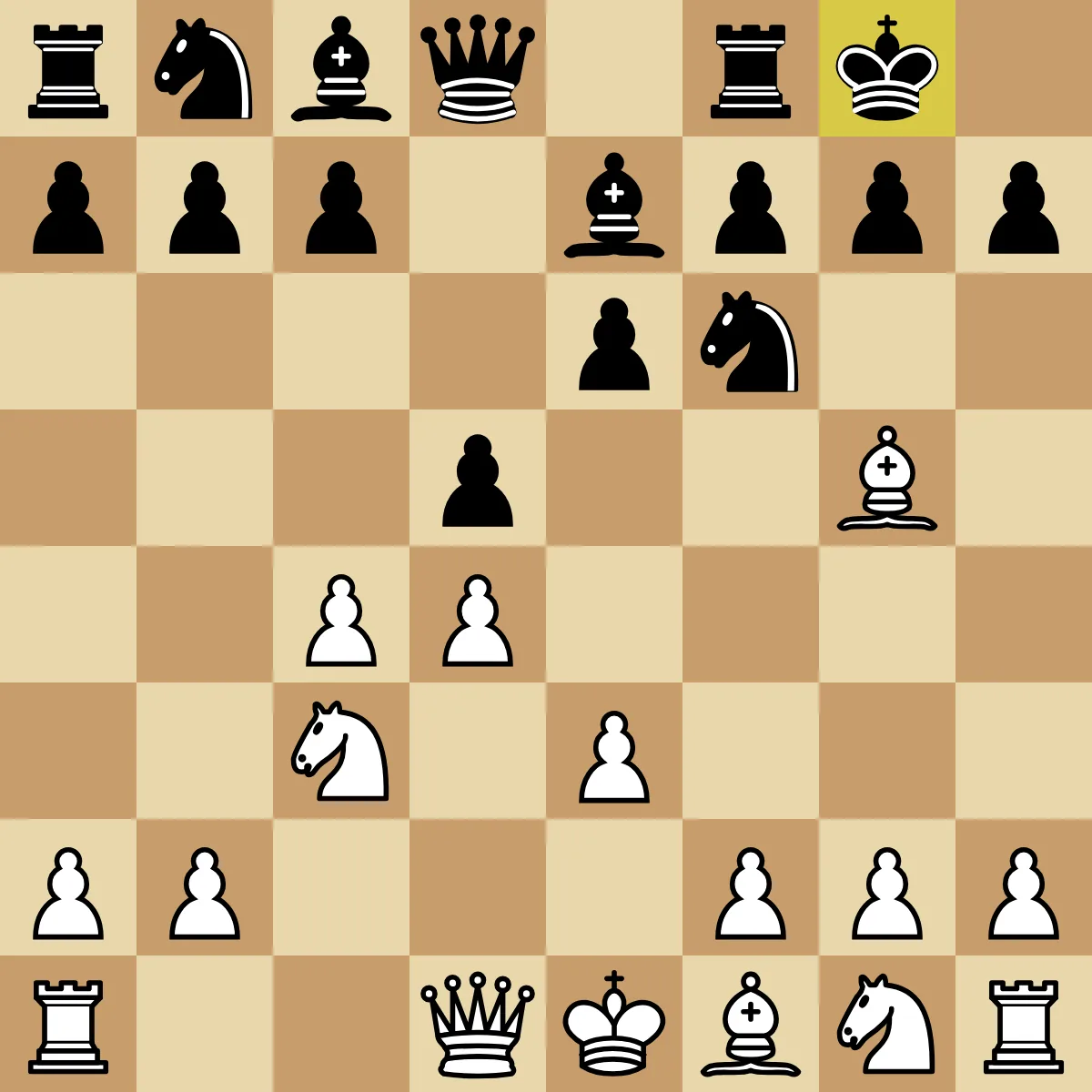
Fifteen focused minutes are enough for one useful opening decision.
Fifteen minutes is enough for a real opening session. It is not enough for browsing three databases, watching half a video, and adding twelve lines you will never review.
The routine below has one purpose: leave with a small number of positions you can answer more reliably than when you started.
Minutes 0-2: choose today's problem
Open one of these:
- a position missed in your last game
- a fragile branch from your review queue
- the next common reply missing from your repertoire
Choose one. If you begin by scrolling the entire catalog, the session will disappear into selection.
Name the job in a sentence: “Review my response to the Caro-Kann Advance,” or “Fix the move order after Black develops the knight first.”
Minutes 2-6: recall weak positions
Review three to five positions without notes. For each one:
- inspect the opponent's last move
- choose your response
- say the reason aloud or in one short sentence
- check the answer
If you miss, mark the type of miss: position, move, reason, or interference from another branch. The opening review guide explains those categories.
Do not spend all four minutes grinding one position. Correct it, make one clean attempt, and let it return later.
Minutes 6-10: learn one decision
“One decision” is smaller than “one line.” It includes:
- the position before the opponent's meaningful reply
- the reply
- your move
- the board feature that makes the move useful
- a short continuation to a stable position
For example, after 1.d4 d5 2.c4 e6, Black has supported d5 and closed the c8 bishop's natural diagonal. White's next developing move should fit the pressure on the center. That is a decision you can recognize later.
Try your move before revealing it. Research on retrieval practice distinguishes attempting an answer from seeing it repeatedly. A well-known study used prose, not chess, so apply the finding modestly: your session should contain actual attempts, not only exposure. See Roediger and Karpicke (2006).
Minutes 10-13: test without support
Reset to the decision point. Hide the explanation, arrows, and notation.
Play through the branch once. If you fail, return to the exact missed position instead of restarting the whole opening. Finish with one correct attempt and its reason.
Then test one nearby reply. The goal is not to know its full theory. Ask whether your opening principles and structure knowledge still produce a sensible candidate.
This prevents a new line from becoming a brittle script.
Minutes 13-15: connect the session to play
Write two lines:
Today I fixed: ...
In my next games I will notice: ...
If the position came from a game, link the note to that game. If it did not, define the trigger that will make it relevant: “when Black supports d5 with e6,” or “when White advances e5.”
End the session. Do not reward completion by importing five more variations.
A weekly rhythm for the routine
The 15-minute structure stays the same, but the emphasis can change:
- Monday: repair a recent-game mistake
- Tuesday: mixed review
- Wednesday: one new common branch
- Thursday: contrast two confusing positions
- Friday: mixed review
- Weekend: play and capture one new question
You do not need to train every day. Three or four deliberate sessions can be easier to sustain than a perfect streak. The larger opening study plan shows how the sessions fit into a monthly feedback loop.
What not to fit into 15 minutes
Avoid:
- changing your entire repertoire
- watching a long lesson while calling it practice
- clearing every due item regardless of attention
- checking engine evaluations before stating your own reason
- adding rare sidelines because they look interesting
These activities can have a place elsewhere. They compete with recall inside a short session.
Adjust when the queue gets too large
If you cannot finish a focused set in 15 minutes, stop adding lines. Keep positions from recent games and the main branches. Suspend rare sidelines until the queue becomes manageable.
Spacing study sessions generally supports longer retention better than massing the same work, but the useful interval varies with the retention goal. The Cepeda et al. review is a reminder to adjust based on performance rather than follow one universal calendar.
How Chessmate fits the routine
Chessmate separates Study, Review, and Challenge. A 15-minute session can move through the same sequence: understand one decision, recall weak positions, then test without the answer visible. Disclosure: Chessmate is our product.
The tool matters less than the boundaries. One problem, a few honest attempts, one new decision, and a note for the next game. That is a full session.
Sources
Master openings.
Learn curated lines, recall the move from the board, and keep useful positions fresh with spaced review.