How to review chess opening lines so they survive real games
Review opening lines from the decision point, diagnose each miss, and schedule the next attempt without replaying your whole repertoire.
By Chessmate Team
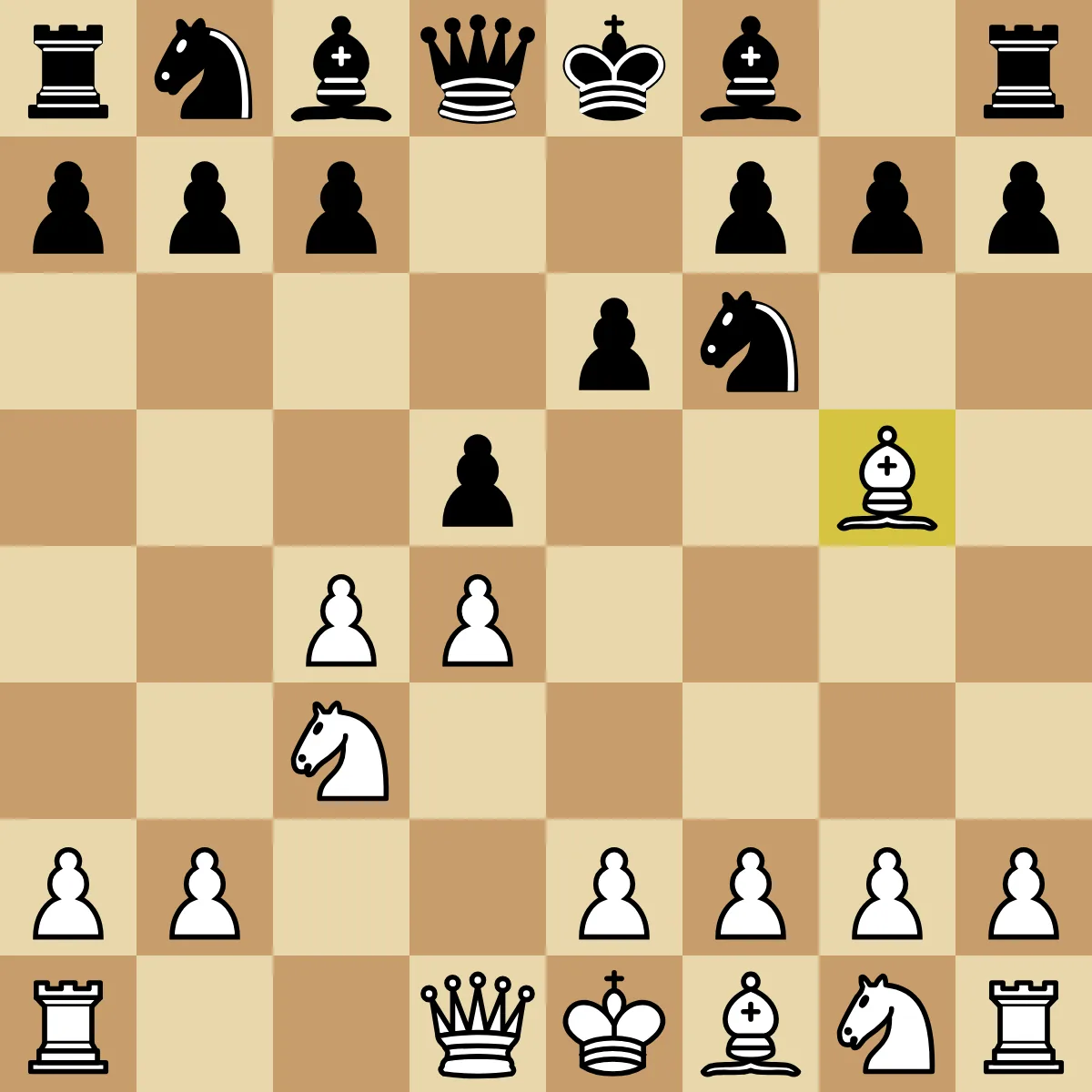
Review should begin where a real decision appears, not automatically at move one.
The worst opening review session is also the most comfortable: click through every line, recognize every move, and finish with the feeling that you knew it all.
The next game provides a board without arrows, notes, or an answer waiting under the cursor. Review should recreate that demand. Look at the position, choose a move, then use the result to decide what returns later.
Begin at the decision, not always at move one
If five lines share 1.e4 e5 2.Nf3 Nc6, replaying those moves five times mostly tests the part you already know. Start after the opponent's move that creates the branch.
For example:
- after
3.Bc4 Bc5, review your plan against the Italian Game setup - after
3.Bc4 Nf6, review the Two Knights decision separately - after
3.Bb5, treat the Ruy Lopez as another position
This makes the cue more precise. The opponent's move and the resulting board should call up your answer.
Attempt the move before reading anything
Hide the notation and explanation. Give yourself enough time to inspect the position, but do not turn the review into a five-minute calculation exercise.
Ask:
- What changed on the last move?
- Is there a threat I must answer?
- Which move did I train here?
- What was its reason?
Then play a move.
Research on retrieval practice supports the distinction between producing an answer and restudying it. Roediger and Karpicke found better delayed retention after repeated retrieval than repeated study for prose passages. That result is not a direct trial of chess training, but it warns against treating recognition as proof of recall. Read the study abstract on PubMed.
Diagnose the miss before correcting it
An incorrect move can come from several failures:
- position miss: you did not recognize the branch
- move miss: you recognized it but could not produce the answer
- reason miss: you remembered the move but not what it accomplishes
- interference: a move from a nearby branch came to mind
- scope gap: the position was never in your repertoire
Do not respond to every miss by replaying the whole line. Fix the smallest broken part.
For interference, compare the two positions and name the changed feature. For a reason miss, write one concrete sentence. For a scope gap, decide whether the reply is common enough to deserve a branch.
Correct, then make one clean attempt
After a miss:
- reveal the trained move
- read or write its reason
- play the continuation until the position stabilizes
- reset to the missed position
- answer once more without help
The final attempt matters. Ending immediately after seeing the answer leaves the correction in recognition mode.
Avoid drilling the same position ten times in a row. The later repetitions become easy because the answer is still active, not necessarily because the board cue is strong.
Separate new, fragile, and stable positions
A simple review queue needs only three states:
- new: learned but not yet recalled successfully
- fragile: missed, hinted, or confused with another branch
- stable: recalled with a correct reason more than once over time
New and fragile positions should return sooner. Stable positions can wait. If a stable position fails in a game, bring it back to fragile.
Distributed-practice research shows that spacing and the desired retention period interact. There is no universal interval that is best for all material. Use success and failure to adjust the delay rather than worshipping a fixed schedule. See the Cepeda et al. review.
Review both sides of the branch
Many opening errors happen because only the preferred continuation was practiced. Review the opponent's decision too.
In the Queen's Gambit, show the position before Black chooses ...dxc4 or ...e6. Ask yourself what each move changes. Then review White's response from the resulting board.
This helps prevent a valid move from one structure leaking into another. It also teaches the branch as a decision rather than a title.
Use recent games as priority signals
At the end of a game, record the first opening position where you hesitated, forgot, or misunderstood. Put that position near the front of the next review.
Do not review only losses. A win can hide an opening mistake, and a loss can begin from a perfectly playable position. The useful question is whether your opening decision matched what you intended to train.
If an opponent chose an unfamiliar move, follow the out-of-line checklist before adding theory. Some deviations deserve a new branch; others only need sound chess.
A ten-minute review session
Use this compact structure:
- 2 minutes: two fragile positions from recent games
- 5 minutes: a mixed queue of decision points
- 2 minutes: compare one confused pair of branches
- 1 minute: note the position that should return next
Stop before attention collapses. Review quality matters more than clearing an arbitrary queue.
What a good review record contains
For each difficult position, save:
- the board position or FEN
- the opponent's last move
- your intended move
- one specific reason
- the move you confused it with, if any
- the next time or condition for review
That record is more useful than a red “wrong” counter. It tells you what failed and how to repair it.
Chessmate's Review mode brings trained positions back and asks for the next move; Challenge removes more support. Disclosure: Chessmate is our product. The same review loop works with cards, a physical board, or a study tool as long as the answer is hidden until after your attempt.
Good review does not make every line feel familiar. It exposes exactly where familiarity ends.
Sources
Master openings.
Learn curated lines, recall the move from the board, and keep useful positions fresh with spaced review.