Should you memorize opening moves or understand the plans?
Compare a forcing check with a quiet Queen's Gambit position, then build a cue–move–purpose note that tests recall and understanding together.
By Chessmate Team
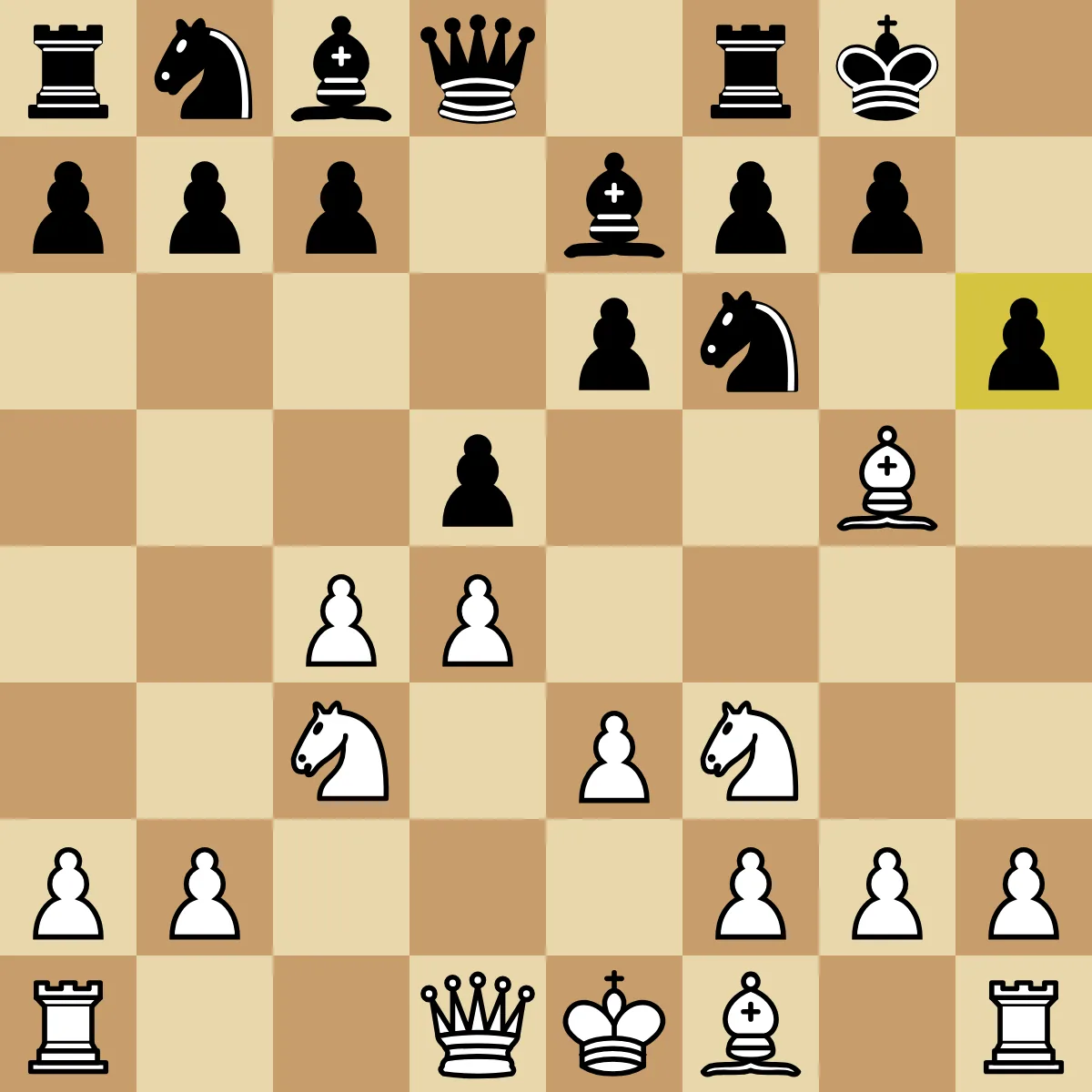
The move answers today's position; the plan explains what should happen next.
“Do not memorize moves. Understand the plans” sounds wise and is incomplete.
You cannot play a plan without choosing a move. You also cannot carry a long opening line safely if every move is stored without a reason. Strong opening learning connects a concrete answer now to a position you want next.
What deserves exact recall
Memorize a move when the position contains a specific demand:
- a tactical threat has one reliable answer
- move order determines whether a plan works
- a common branch begins with a concrete choice
- a natural-looking move creates a known problem
- the decision repeatedly costs time in your games
For example, if an opponent attacks a piece, “improve my worst piece” is not enough. You must calculate a response. In some opening positions, the useful answer is worth training until the board itself cues it.
Exact recall should be selective. A repertoire full of forced and high-frequency decisions is valuable. A repertoire full of arbitrary database continuations is difficult to maintain.
What a plan contributes
A plan is not a slogan such as “attack the king.” It connects features of the position to a direction of play.
A useful opening plan might state:
- challenge the d5 pawn before Black frees the c8 bishop
- finish development, then prepare the
e4break - trade the opponent's active bishop and play against weak dark squares
- recover the c4 pawn without delaying development
This information helps after the remembered line ends. It also helps reject moves that look familiar but belong to another structure.
Use a three-part note for every important move
Record:
- Cue: what changed on the board?
- Move: what do I play?
- Purpose: what does it solve or prepare?
Example:
Cue: Black supports d5 with ...e6 and closes the c8 bishop.
Move: Nc3.
Purpose: Add pressure to d5 and support a later e4 break.
This is more retrievable than a paragraph and more useful than bare notation.
Two boards: a forced task and a flexible choice
Set up 1.e4 d5 2.exd5 Qxd5 3.Nc3 Qe5+. White is in check along the e-file. The usual developing move Nf3 is illegal here because it leaves the king in check. 4.Be2 blocks the check and develops a bishop. It is one legal answer, not a claim that every other answer loses. The cue worth remembering is the open e-file and the check, rather than the opening's name.
Now compare 1.d4 d5 2.c4 e6 3.Nc3 Nf6 4.Bg5 Be7. White is not in check. 5.e3 opens the f1 bishop's diagonal and supports d4; 5.Nf3 develops the knight and also supports d4. Both serve development. A sample continuation is 5.e3 O-O 6.Nf3. Black need not follow that script, so inspect each reply before continuing.
| Position | Cue | A move | Purpose and next check |
|---|---|---|---|
Scandinavian after 3...Qe5+ | King in check on the e-file | 4.Be2 | Block the check; reassess Black's queen move |
Queen's Gambit after 4...Be7 | Development unfinished; no check | 5.e3 | Release the f1 bishop; compare development after Black replies |
Cover the move column. Name the cue, choose a legal move, then explain what it changes. If you recall Be2 but miss that the king is in check, keep the cue in your review. If you choose Nf3 in the Queen's Gambit with a sound reason, do not mark understanding as failed just because your saved line says e3. Exact repertoire recall and a playable independent choice are different checks.
Compare e3 and Nf3, then reset to try the other move. These are two candidates, not the only legal moves.
Compare e3 and Nf3, then reset to try the other move. These are two candidates, not the only legal moves.
For the full structure behind the second board, use the Queen's Gambit guide. This exercise decides what to memorize; the memorization tutorial explains how to schedule and maintain it.
Check tactics before following the plan
A player may understand the “general plan” and still overlook a tactic. Before following a strategic idea, check:
- checks
- captures
- direct threats
- loose pieces
- whether the opponent's last move prevented your idea
Plans operate under tactical permission. Opening knowledge should narrow candidates, not switch off calculation.
Moves cannot replace understanding
Bare move memory fails in predictable ways. The opponent changes the order, the line ends, or a similar branch supplies the wrong answer.
When that happens, a concrete reason can reconstruct the next move. If you remember that c4 challenges d5, you can recognize why it belongs in several queen's-pawn structures even if the exact sequence fades.
Our tutorial on how to memorize chess openings gives the full method for breaking one line into board decisions. The guide on principles versus lines covers how general rules help outside prepared positions.
Train the move first, then widen the position
Use this sequence:
- study the position and explanation
- hide the answer and play the move
- explain the purpose in one sentence
- continue to the target position
- return to the decision later
- test a nearby opponent reply and choose from the plan
The fifth step checks recall. The sixth checks whether the idea transfers beyond the script.
Retrieval-practice research shows that producing an answer and rereading it are not equivalent learning activities. The classic evidence comes from verbal material, not chess positions, so it cannot establish a chess-specific training effect. It still supports putting an honest attempt inside the learning loop. See Roediger and Karpicke (2006).
Diagnose what failed in a game
After an opening mistake, ask:
- Did I know the plan but miss a concrete threat?
- Did I recall the move but misunderstand its follow-up?
- Did I confuse this position with another branch?
- Was the line outside my repertoire?
The repair follows the failure. Tactical blindness needs calculation and threat checking. A lost move needs recall. A lost plan needs a better position note. Interference needs contrast review.
What beginners should prioritize
For each repertoire branch, a beginner needs:
- one central idea
- the opponent's first meaningful reply
- one concrete response
- a target position with a next plan
- a fallback checklist when the branch changes
That is small enough to train and complete enough to use.
Chessmate places short move explanations beside the board, then asks for the move in Review and Challenge. Disclosure: Chessmate is our product. The product design reflects the same answer: moves and plans should be learned together.
Memorize the decisions that are expensive to reconstruct. Understand the position well enough to continue when recall runs out.
Sources
Master openings.
Learn curated lines, recall the move from the board, and keep useful positions fresh with spaced review.